

When the power goes out, your Briggs & Stratton generator is ready to roar to life. But safely connecting that power to your home’s electrical panel is a critical step many overlook. An unsafe backfeed can endanger utility workers, damage your appliances, and create a serious fire hazard. That’s where a certified generator interlock kit becomes essential.
This guide is for homeowners who want a safe, code-compliant way to power their circuits during an outage. We have assessed the leading interlock kits designed to work with common residential panels. Pairing one with a proper Briggs & Stratton generator extension cord and inlet box creates a complete, safe backup system. Let’s explore your options to keep your home running safely when the grid goes down.


Pros
- Precise fit for 1 3/8 inch breaker spacing with no modifications needed
- Comprehensive package includes drill bit, screws, labels, and detailed manual
- Easy DIY installation without requiring additional wiring or control boxes
- Heavy-duty steel construction ensures reliable long-term performance
- Excellent value compared to professional installation or panel replacement
Cons
- Only compatible with specific Square D panel models and spacing requirements
- Requires basic DIY skills and proper safety precautions during installation
- May not fit panels with non-standard breaker spacing or older model variations
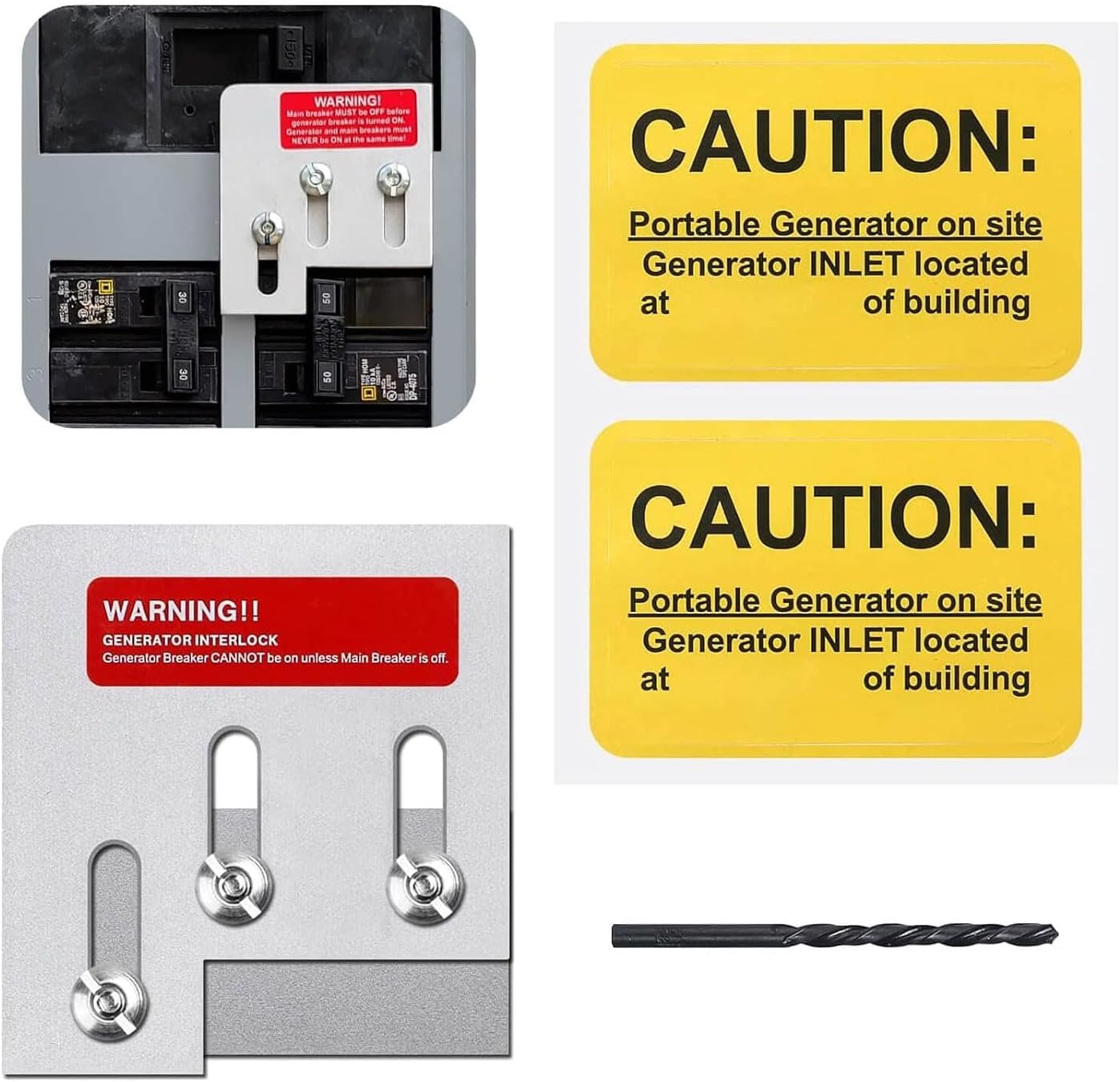
The SafetyGeneratorInterlockkit SD200A is a professional-grade interlock solution designed for homeowners and contractors who want to safely connect portable generators to Square D QO or Homeline electrical panels rated 150 or 200 amps. This product is ideal for anyone seeking backup power during outages without the expense and complexity of hiring a licensed electrician.
The standout feature is its mechanical interlock design that prevents simultaneous operation of main and generator breakers, eliminating the dangerous risk of backfeeding power into utility lines. Installation is straightforward thanks to the included 3/16 inch drill bit that cuts cleanly through the breaker panel, along with pre-drilled templates that guide proper placement. Users consistently report that the kit fits perfectly and functions exactly as intended, with one reviewer noting it installed cleanly in their Square D QO panel with 1.5 inch spacing.
Build quality is excellent, with sturdy steel construction that withstands repeated use and environmental exposure. The complete package includes the interlock plate, shoulder screws, hex nuts, generator startup procedure labels, reminder labels, zip ties, instruction bulletin, and drill bit. No additional wiring, control boxes, or electrical expertise is required beyond basic mechanical assembly skills.
The main limitation is compatibility, as this kit only works with Square D QO and Homeline panels with specific 1 3/8 inch breaker spacing. Installation does require careful attention to safety procedures and proper panel layout understanding. Homeowners uncomfortable working inside electrical panels should consult a professional electrician.
Overall, this interlock kit delivers excellent value and reliable safety performance for DIY backup power installation. With strong user ratings and consistent positive feedback about fit and function, it represents a smart investment for protecting your home and community during power outages.
Compatibility: Square D QO and Homeline 150 or 200 amp panels with 1 3/8 inch breaker spacing
Model: SD200A with manufacturer part number SD200A-B
Materials: Heavy-duty steel construction with zinc plating for corrosion resistance
Dimensions: 3 inches length x 0.6 inches width x 5.8 inches height
Weight: 0.11 kg (approximately 0.24 lbs)
Package Contents: 1 interlock plate, 3 shoulder screws, 3 hex nuts, 1 generator startup procedure label, 5 reminder labels, 2 zip ties, 1 instruction bulletin, 1 3/16 inch drill bit
Warranty: 2-year manufacturer warranty with replacement guarantee if defective
Current Rating: 200 amps maximum
Before You Start: Turn off main breaker and verify power is disconnected. Review all instructions and identify correct breaker spacing. This project requires basic mechanical skills and attention to electrical safety procedures.
Key Installation Steps: Use the included drill bit to create mounting holes according to template placement. Install shoulder screws and hex nuts to secure the interlock plate. Mount the generator breaker according to spacing requirements. Apply provided labels for generator startup procedures and safety reminders. Test mechanical interlock function to ensure main and generator breakers cannot operate simultaneously.
Safety Reminders: Never operate main and generator breakers at the same time. Always follow local electrical codes and permit requirements. When in doubt, consult a licensed electrician. Proper installation prevents dangerous backfeeding that could injure utility workers or damage connected devices.

Buying Guide for Generator Interlock Kits
Confirm Your Electrical Panel Compatibility
The single most important factor is matching the kit to your specific electrical panel brand and model. A kit for a Square D panel will not fit an Eaton panel. Check the main breaker brand and the series, such as Eaton BR or Square D Homeline.
You must also measure the spacing between your main breaker and the first branch breaker slot. This distance, typically between 7/8 inch and 1 3/8 inches, dictates which kit you need. An incorrect fit will render the interlock unsafe and unusable, so double-check your panel’s specifications before purchasing.
Prioritize Safety Certifications and Design
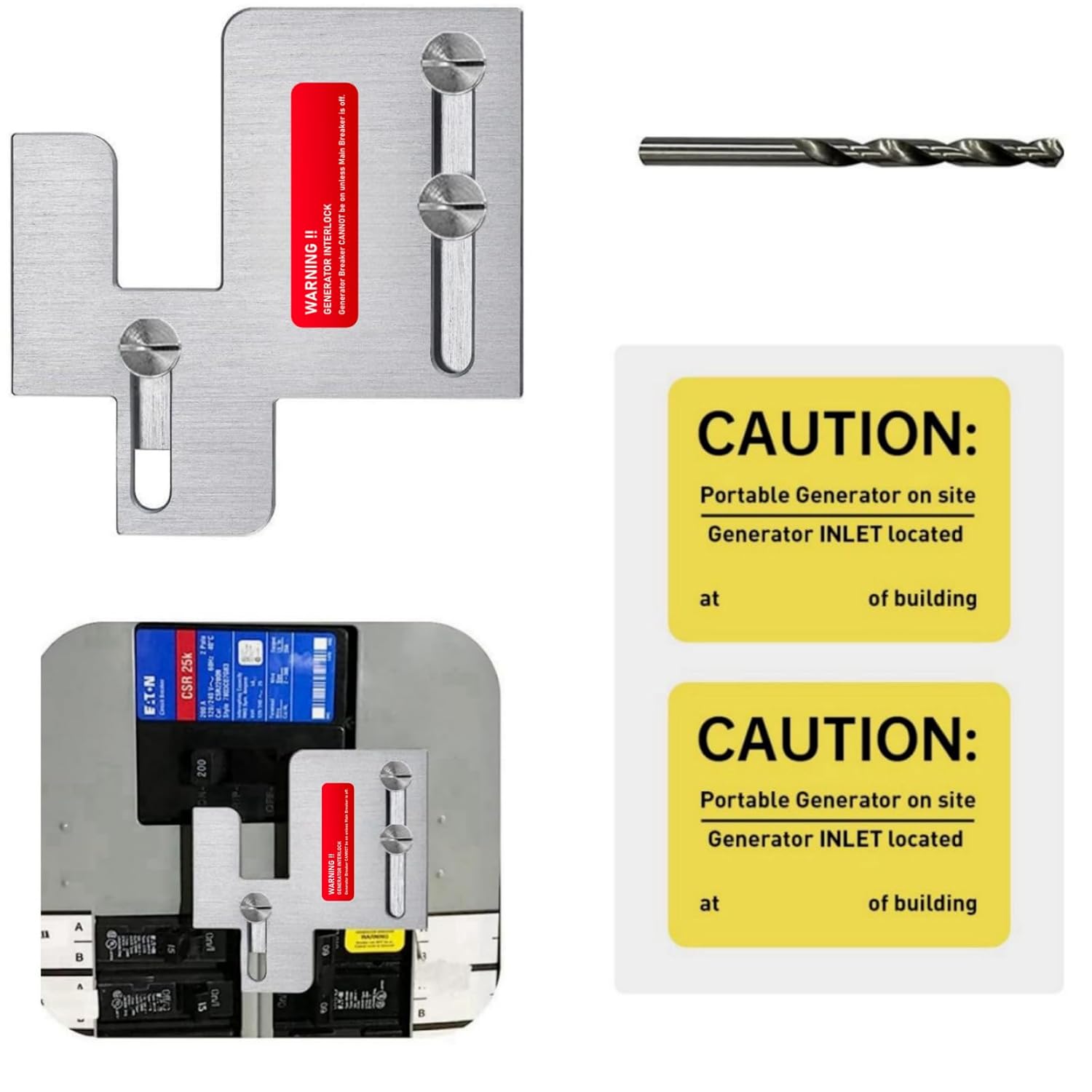
A quality interlock kit provides a physical barrier that prevents both the main utility breaker and the generator breaker from being on simultaneously. This is the core safety function. Look for kits made from sturdy, anodized aluminum that moves smoothly without bending or jamming.
The kit should include clear warning labels and a startup procedure label for your panel. These visual reminders are crucial for safe operation during a stressful outage. A well-designed kit works seamlessly with a Briggs & Stratton generator power inlet box to create a fully integrated system.
Evaluate the Installation Process and Kit Contents
<!–Most kits are designed for straightforward installation, often requiring only basic tools. A complete kit should include the interlock plate, all necessary mounting hardware (shoulder screws and hex nuts), a drill bit for creating mounting holes, and comprehensive instructions.
Verify that everything needed is in the box. Missing hardware can delay your installation. While many DIY enthusiasts can handle this project, if you are unsure, consulting a licensed electrician is always the safest choice to ensure everything is up to local electrical code.
Consider Your Generator’s Connection Type
<!–Your interlock kit works in tandem with your generator’s connection method. The generator breaker you install in the panel must match your generator’s output. For example, a 30-amp generator outlet requires a 30-amp double-pole breaker in the panel.
You will also need the correct cord and inlet box. Having the right Briggs & Stratton generator adapters on hand ensures a secure connection from your generator to your home’s electrical system, completing the safe power transfer loop.
Final Thoughts
Selecting the right interlock kit is a vital step in creating a safe home backup power system with your Briggs & Stratton generator. For most homeowners with common Eaton Cutler Hammer BR panels, the Generator Interlock Kit for Eaton Cutler Hammer BR from EXCELFU offers a reliable, highly-rated solution. If your home has a Square D QO or Homeline panel, the Generator Interlock Kit Compatible with Square D from SafetyGeneratorInterlockkit is a proven choice with extensive user validation. Always prioritize exact compatibility and proper installation for peace of mind during any power outage.
Frequently Asked Questions
Is a generator interlock kit legal and up to code?
When installed correctly on a listed and labeled panel, a generator interlock kit is an approved method for backfeeding power under the National Electrical Code (NEC). However, local codes can vary. It is always recommended to check with your local building authority or a licensed electrician to ensure compliance in your area for 2026.
Can I install an interlock kit myself?
Many kits are designed for DIY installation by someone comfortable working inside an electrical panel. It involves drilling mounting holes and securing the plate with provided hardware. If you are not confident working with electricity, hiring a professional electrician is the safest option to ensure a correct and safe installation.
What’s the difference between an interlock kit and a transfer switch?
An interlock kit is a mechanical device that allows you to use your existing panel breakers to power circuits, but you must manually switch which circuits are powered. A transfer switch is a separate electrical panel with dedicated circuits. Interlock kits are generally more affordable and flexible, while transfer switches offer more convenience. For more on configuring your generator setup, see our guide on Briggs & Stratton generator parallel kits.
Do I need a special breaker for my generator with an interlock kit?
Yes. You will need to purchase and install a double-pole circuit breaker that matches your generator’s output amperage (e.g., 30-amp or 50-amp) into your main electrical panel. This breaker is what the interlock kit physically prevents from being on at the same time as your main utility breaker.



Write Your Review
No reviews yet. Be the first to share your experience!