

You’ve invested in a reliable generator for backup power, but what happens when it sits unused for months? Fuel left in the tank degrades over time, forming gum and varnish that can clog your carburetor and fuel lines. This guide is for generator owners who want to protect their equipment from costly repairs and ensure a quick start when the next outage hits. We will help you understand how a quality stabilizer works and what to look for, starting with a key product for your consideration. Proper fuel storage is a critical part of your overall maintenance strategy, which you can learn more about in our guide to essential generator maintenance kits.
Pros
- Highly effective at preserving fuel quality during long storage periods
- Compatible with all fuel types from standard gasoline to E-85 ethanol blends
- Eliminates expensive and inconvenient fuel tank draining procedures
- Trusted formula with over 20 years of proven performance since 2003
- Affordable solution compared to fuel system repairs from degraded fuel
Cons
- Requires proper dosing and mixing with fuel for optimal effectiveness
- Some users report the price point could be lower for occasional use
- Results depend on proper storage conditions and fuel quality at purchase
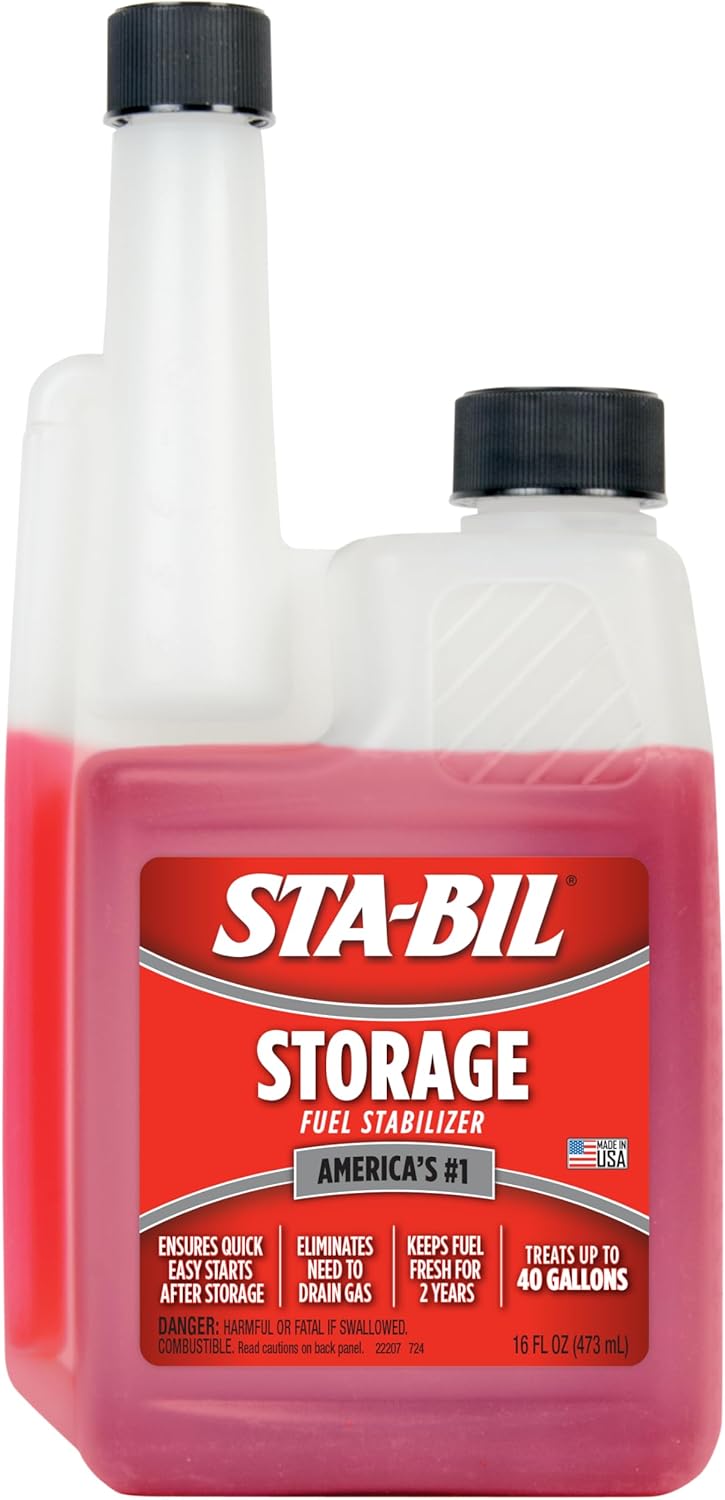
STA-BIL Storage Fuel Stabilizer is a chemical additive designed for anyone who stores vehicles, lawn equipment, boats, motorcycles, or other small engines seasonally. If you've ever had an engine refuse to start after months of storage due to fouled fuel, this product solves that problem by keeping gasoline fresh and ready to go.
The standout feature is its 24-month fuel preservation capability across all gasoline types, including modern ethanol blends up to E-85. Users consistently report that equipment starts reliably after long storage periods, eliminating the frustration of gum and varnish buildup in fuel systems. The formula is simple to use, requiring only a single pour into the fuel tank before storage.
This product comes in a convenient 16 oz bottle that treats multiple tanks depending on fuel volume. The build quality is straightforward, with a practical bottle design that's easy to measure and apply. Gold Eagle Co., the manufacturer, has refined this formula over decades, which explains the exceptional customer satisfaction and market leadership position.
The main consideration is that results depend on proper dosing and storage conditions. Additionally, while the price is reasonable for seasonal protection, frequent users might find the per-use cost accumulates over time. However, compared to fuel system repairs or engine replacements from degraded fuel, this preventative approach delivers excellent value.
STA-BIL Storage Fuel Stabilizer is a must-have product for anyone maintaining seasonal equipment or vehicles. Its proven track record, broad fuel compatibility, and reliable performance make it the smart choice for extending fuel life and ensuring dependable starts year after year.
Choose STA-BIL Storage Fuel Stabilizer if you own lawn equipment, seasonal vehicles, boats, motorcycles, ATVs, or any small engine that sits unused for months. This product is essential for anyone in cold climates storing equipment over winter or those storing vehicles during off-seasons.
The 16 oz bottle treats approximately 16 gallons of fuel, so calculate your total storage tank volume before purchasing. For multiple pieces of equipment or larger fuel volumes, you may need multiple bottles. Always add the stabilizer to fresh fuel before storage begins for best results, and ensure proper mixing by running the engine briefly after treatment.
This product works with all fuel types, but pay special attention if using ethanol blended fuels like E-10 or higher. The formula is specifically engineered for these modern fuel blends, so it's an ideal choice for current vehicles and equipment. Store the stabilizer itself in a cool, dry place away from direct sunlight.
Buying Guide
Fuel Type Compatibility
The first and most crucial factor is compatibility with your generator’s fuel. Most portable generators run on regular unleaded gasoline, but some models are dual-fuel or tri-fuel. You must confirm the stabilizer is formulated for your specific fuel type. Using an incompatible product can be ineffective or even harmful to your engine’s components.
For standard gasoline, look for a stabilizer that handles ethanol-blended fuels, which are common today. If you use other fuels, check the product label carefully. Our resource on different generator fuel types can help you understand your options.
Treatment Duration and Effectiveness
<!–Not all stabilizers are created equal when it comes to long-term protection. A key specification is the treatment duration, often stated in months. Some formulas protect fuel for up to 12 months, while others may offer 24 months of stability. Consider your typical storage periods, whether for seasonal equipment or year-round standby units.
Effectiveness is measured by the product’s ability to prevent oxidation, resist moisture absorption, and inhibit corrosion. Look for stabilizers that are validated to keep fuel fresh and prevent the formation of harmful deposits that can clog small engine jets.
Ease of Use and Mixing Ratio
<!–A good stabilizer should be simple to use. Features like a clear measuring cap or easy-pour spout make the process accurate and mess-free. Pay attention to the mixing ratio, which tells you how much stabilizer to add per gallon of fuel. A product with a simple, consistent ratio is easier to measure correctly every time.
Some stabilizers are designed to be added directly to a full fuel can before you fill your generator, which is a best practice. This ensures thorough mixing and protects the fuel from the moment it’s stored. For safe fuel handling, review our recommendations for the best generator fuel cans.
Brand Reputation and User Validation
<!–In the world of engine care, trust matters. Established brands with a long history in the automotive and small engine industry have often refined their formulas over decades. These products are frequently validated by both professional mechanics and a large base of consumer reviews.
Choosing a well-rated product from a reputable brand provides confidence that the stabilizer will perform as advertised. It’s a small investment to safeguard the much larger investment you’ve made in your generator. You can explore more trusted products in our full generator accessories category.
Final Thoughts
Protecting your generator with a fuel stabilizer is a simple yet vital step in responsible ownership. For reliable, long-term fuel stabilization in gasoline engines, the STA-BIL Storage Fuel Stabilizer, 16 oz is a top-rated choice trusted by many. Whichever product you select, using it consistently will help ensure your generator is ready to power on when you need it most, keeping your essential portable generators and other equipment in peak condition.
Frequently Asked Questions
How long can I store fuel in my generator with a stabilizer?
<!–With a high-quality fuel stabilizer, treated gasoline can typically remain stable and usable in your generator’s tank for 12 to 24 months. Always check the specific product’s label for its certified treatment duration. For optimal results, run the engine for a few minutes after adding the treated fuel to circulate it through the carburetor.
Can I use a fuel stabilizer in a generator that already has old gas?
<!–A stabilizer is designed for prevention, not reclamation. It is most effective when added to fresh fuel. If your generator contains old, degraded gasoline that has been sitting for over six months without treatment, the best practice is to safely drain the old fuel and start with a fresh, stabilized batch to avoid engine issues.
Do I need a different stabilizer for ethanol-free gas?
<!–Many modern fuel stabilizers are formulated to handle both ethanol-blended and ethanol-free gasoline. Ethanol-free fuel is inherently more stable, but it can still oxidize over time. Using a stabilizer is still recommended for long-term storage, even with premium fuels, to prevent varnish and corrosion.
Is a fuel stabilizer necessary if I only use my generator occasionally?
<!–Yes, occasional use is precisely when a stabilizer is most critical. Modern gasoline begins to degrade in as little as 30 days, forming gums that can clog small passages in your carburetor. Using a stabilizer every time you refuel ensures the fuel is protected during those idle periods between uses, maintaining reliability for the 2026 season and beyond.





Write Your Review
No reviews yet. Be the first to share your experience!