

When the power goes out, whether from a storm or a grid failure, having a reliable backup source is more than a convenience; it’s a necessity for safety and comfort. A portable tri-fuel generator offers a powerful solution, giving you the freedom to run on gasoline, propane, or natural gas based on availability and cost. For homeowners, contractors, and outdoor enthusiasts seeking robust power without being tethered to a single fuel type, this flexibility is invaluable. This guide is crafted for anyone who needs dependable, portable power for home essentials, job sites, or recreational vehicles. We have evaluated top models to help you make an informed decision. For other options tailored to different spaces, explore our review of the best tri-fuel generators for small homes.

Pros
- Exceptional power output with 9,500 running watts handles multiple large appliances, AC units, and home systems at once
- Tri-fuel capability provides unmatched flexibility to switch between fuel sources based on availability and cost
- EFI technology reduces emissions, improves fuel efficiency, and minimizes maintenance compared to carbureted models
- Remote key fob start adds convenience and safety by allowing operation from a distance
- Comprehensive outlet configuration supports both RVs and whole-home transfer switch installations
Cons
- Open-frame design generates significant noise and vibration, typical for this generator class but noticeable in residential settings
- Remote start feature operates differently than vehicle remote starters, requiring manual fuel valve adjustment for alternative fuel sources
- Heavy weight and size require adequate storage space and may need assistance for positioning
The Westinghouse WGen9500TFc EFI Tri-Fuel Generator represents a premium solution for homeowners seeking reliable whole-home backup power with maximum fuel flexibility. This 12,500-peak-watt generator is engineered for those who want dependable emergency power without being locked into a single fuel source, making it ideal for regions with variable fuel availability or cost fluctuations.
The standout feature is the tri-fuel capability combined with advanced electronic fuel injection technology. Unlike traditional carbureted generators, the EFI system delivers consistent performance across all three fuel types (gasoline, propane, and natural gas) while reducing emissions and fuel consumption. Users report significantly quieter operation compared to older bi-fuel models, and the 15-hour runtime on a single tank provides extended coverage during extended outages. The dual transfer switch ready outlets (50A and 30A) enable seamless integration with home backup systems, powering multiple large appliances simultaneously including air conditioning, refrigeration, and sump pumps.
Build quality reflects Westinghouse's reputation for durability, featuring a heavy-duty 457cc 4-stroke engine with cast iron sleeve construction and automatic low oil shutdown protection. The VFT Data Center display tracks voltage output, frequency, and lifetime operating hours for maintenance planning. Never-flat wheels and a foldable handle make this substantial generator surprisingly portable for its power class. The inclusion of a battery charger, break-in oil, and comprehensive accessories demonstrates attention to user convenience.
Realistic drawbacks include the inherent noise and vibration of an open-frame design, though users note this is typical for generators in this power range. The remote start feature, while convenient, requires manual fuel valve adjustment when switching between fuel sources and doesn't operate like a vehicle's remote starter. Setup and positioning require adequate space and potentially assistance due to the unit's weight.
The Westinghouse WGen9500TFc EFI earns strong marks as a versatile, powerful backup power solution backed by a 3-year warranty and nationwide support network. It represents excellent value for homeowners prioritizing fuel flexibility, reliable performance, and whole-home backup capability.
Power Output: 12,500 peak watts (gasoline), 11,200 peak watts (propane), 9,500 peak watts (natural gas); 9,500 running watts (gasoline), 8,500 running watts (propane), 7,500 running watts (natural gas)
Engine: 457cc Westinghouse 4-stroke OHV with cast iron sleeve, electronic fuel injection
Fuel Tank: 6.6 gallons (25L) with built-in gauge; runtime up to 15 hours on gasoline
Outlets: One 120/240V 14-50R 50A outlet (transfer switch ready), one 120/240V L14-30R 30A twist-lock outlet (transfer switch ready), two 120V 5-20R 20A GFCI duplex outlets
Starting: Remote key fob, electric push-button, recoil backup
Safety Features: CO sensor, automatic low oil shutdown, overload protection, GFCI outlets
Additional Features: Automatic voltage regulation, digital hour meter, VFT Data Center display, USB port, foldable handle, never-flat wheels
Dimensions: 27.3L x 20.6W x 22.6H inches
Warranty: 3-year limited warranty with lifetime technical support
Who Should Buy This Generator: Homeowners in areas prone to power outages seeking reliable whole-home backup power, RV owners needing portable high-wattage capability, and those wanting fuel flexibility for cost savings and availability. The tri-fuel option is particularly valuable in regions where fuel sources vary seasonally or during supply disruptions.
Key Considerations: Verify your home's electrical panel compatibility with transfer switch ready outlets before purchase. Confirm natural gas line availability if planning to use that fuel source long-term. Account for noise levels in residential settings and ensure adequate outdoor placement space. Review local building codes and permit requirements for permanent generator installation.
Setup and Maintenance: The generator arrives with break-in oil and a battery charger, making initial setup straightforward. Follow the quick-start guide for proper fuel selection and priming procedures. Schedule annual maintenance including oil changes, fuel system inspection, and test runs to ensure reliability when needed. The EFI system requires less maintenance than carbureted alternatives, reducing long-term ownership costs.
Performance Expectations: At 9,500 running watts on gasoline, this generator handles most household appliances simultaneously. Test your specific setup during normal operation before relying on it during an outage. Keep backup fuel stored safely and rotate stock regularly. The remote start feature provides convenience but requires manual adjustment when switching fuel sources.
Pros
- Tri-fuel capability provides unmatched flexibility and ensures you have a fuel option available during supply shortages
- Remote start key fob and push-button electric start make operation convenient without manual effort
- Clean power output safely runs sensitive electronics and computers without risk of damage
- Exceptional runtime of up to 19 hours minimizes refueling interruptions during extended outages
- Transfer switch ready design enables whole-home backup with proper installation by a licensed electrician
Cons
- At 230 pounds, this unit requires two people for assembly and moving despite the convenient wheels
- Initial setup and propane or natural gas plumbing requires professional installation for transfer switch integration
- Higher price point reflects premium features but may exceed budget for basic backup power needs
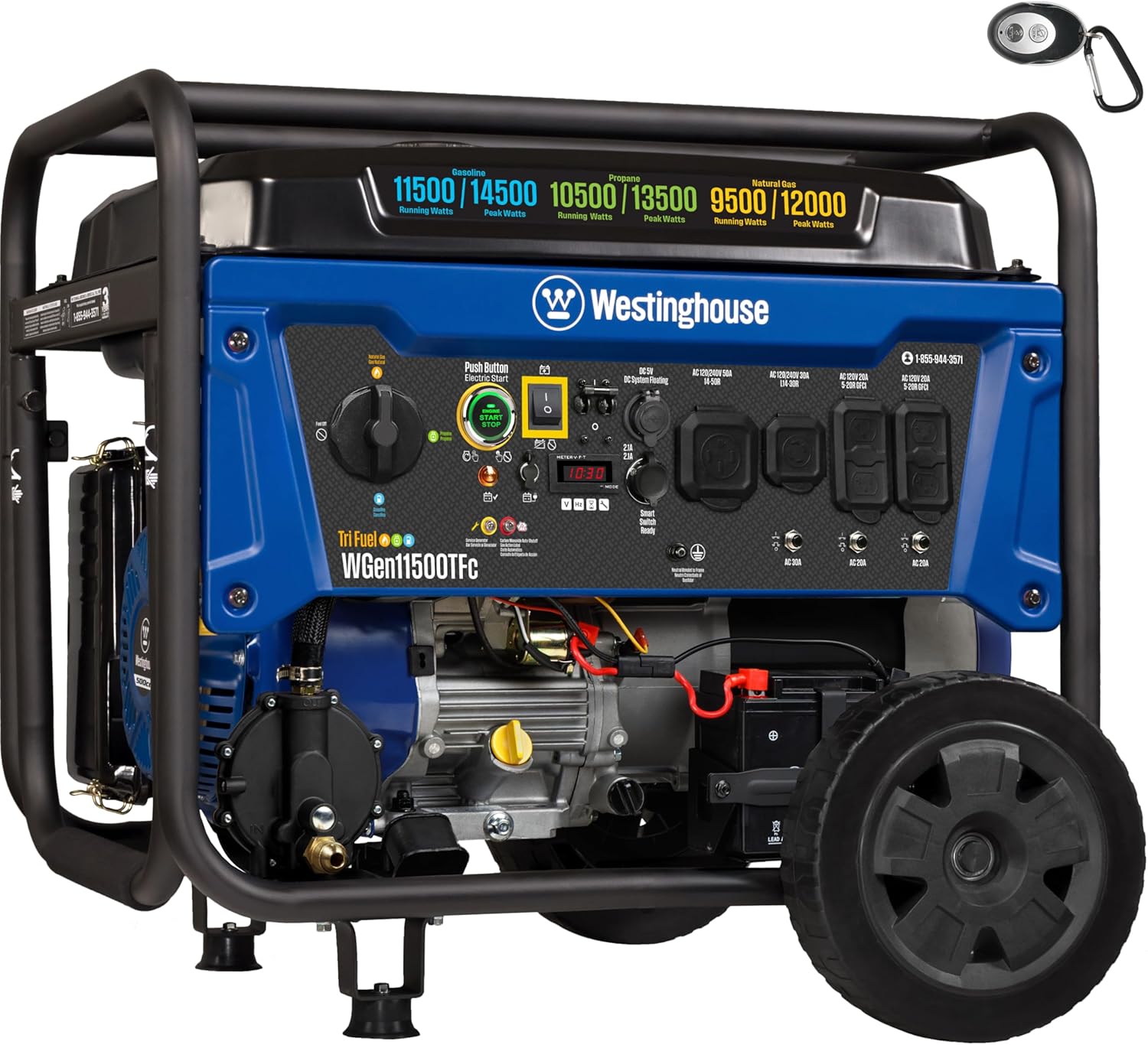
The Westinghouse WGen11500TFc is a premium tri-fuel portable generator designed for homeowners seeking dependable backup power during outages and contractors needing reliable job site electricity. With 14,500 peak watts and 11,500 running watts on gasoline, this unit delivers enough power to run major household appliances simultaneously, making it ideal for larger homes or properties with significant power demands.
What truly distinguishes this generator is its tri-fuel capability and intelligent engineering. The ability to switch between gasoline, propane, and natural gas means you're never stranded if one fuel type becomes unavailable during emergencies. The remote electric start key fob eliminates the frustration of manual pulling, while the transfer switch ready design with both 30A and 50A outlets enables professional installation for seamless whole-home backup. Clean power output under 5% THD with copper windings protects your sensitive electronics, making it safe for computers, phones, and entertainment systems.
Build quality reflects Westinghouse's heritage, with a heavy-duty 550cc 4-stroke engine featuring a durable cast iron sleeve. The unit runs smoothly and quietly, achieving up to 19 hours of runtime on a 9.5-gallon fuel tank. The VFT data center display provides real-time voltage, frequency, and maintenance hour tracking. Automatic low oil shutdown and integrated CO sensor add safety features that protect both your equipment and household.
The main limitation is weight and assembly complexity. At 230 pounds, two people are needed for setup, though the included instructions are clear and well-organized. Professional installation is also recommended for transfer switch integration. Additionally, the premium price reflects its advanced features and may exceed budget for basic backup needs.
Overall, the Westinghouse WGen11500TFc represents an excellent investment for homeowners prioritizing reliability, fuel flexibility, and whole-home backup capability. Customer reviews consistently praise its performance, ease of use, and build quality, making it a top choice for serious backup power planning.
Power Output: 14,500 peak watts / 11,500 running watts (gasoline), 13,500 peak watts / 10,500 running watts (propane), 12,000 peak watts / 9,500 running watts (natural gas)
Engine: 550cc 4-stroke OHV with cast iron sleeve, electronic ignition
Fuel Capacity: 9.5 gallons (36 liters) gasoline tank, up to 7 hours on 20 lb propane tank
Runtime: Up to 19 hours on full gasoline tank
Voltage Output: 240 volts, 60 hertz frequency
Outlets: Transfer switch ready with L14-30R (30A) and 14-50R (50A) connections plus standard outlets
Power Quality: Less than 5% THD, copper windings for clean power
Starting: Push-button electric start with remote key fob
Dimensions: 27.2 inches L x 26.1 inches W x 26.5 inches H
Weight: 230 pounds
Warranty: 3-year limited warranty with lifetime technical support
Is This Generator Right for You? Choose the Westinghouse WGen11500TFc if you own a larger home, want tri-fuel flexibility, need transfer switch capability for whole-home backup, or require a portable generator for job sites and recreational use. This unit is best suited for homeowners willing to invest in professional installation and those who value fuel flexibility and clean power output.
Installation Considerations: While the generator itself is straightforward to assemble, professional installation by a licensed electrician is strongly recommended for transfer switch integration. This ensures safe operation and compliance with local electrical codes. Budget for professional installation costs in addition to the generator purchase price.
Fuel Options: The tri-fuel capability is a major advantage during emergencies. Consider plumbing for natural gas as a permanent backup, keeping propane tanks in reserve, and maintaining gasoline for portability. This multi-fuel strategy ensures you always have power regardless of supply disruptions.
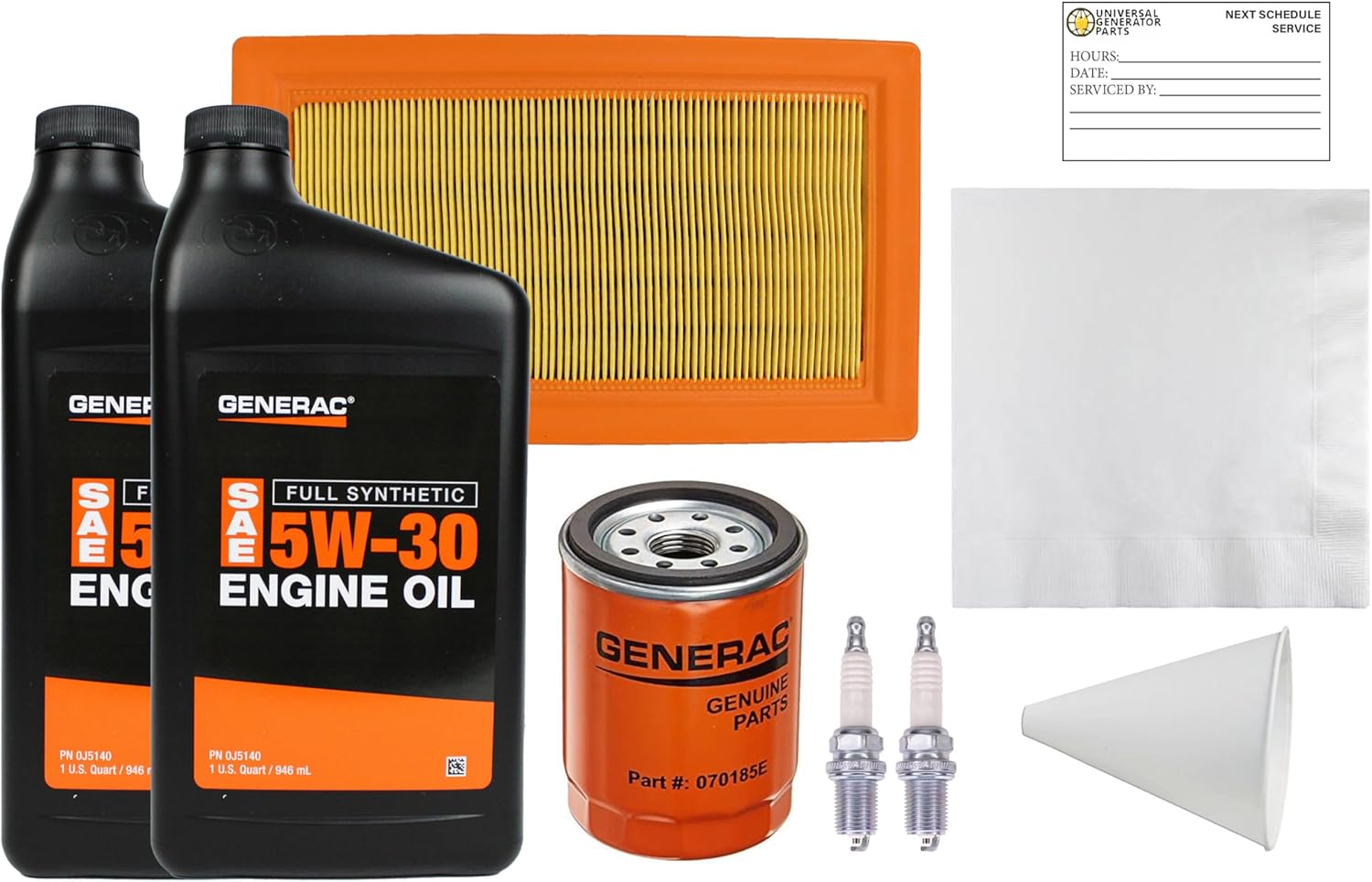
Maintenance: Regular maintenance extends generator life significantly. The included hour meter helps track service intervals. Change oil regularly, stabilize fuel during storage, and perform monthly test runs to ensure reliable operation when needed.
Noise Level: Customer reviews note this generator runs quietly compared to competitors, making it suitable for residential areas and job sites where noise restrictions apply. However, it still produces typical generator noise, so consider placement away from windows and sleeping areas.

Pros
- Exceptional fuel efficiency with inverter technology cuts operating costs compared to traditional generators
- Tri-fuel option eliminates dependency on single fuel source and provides long-term cost advantages
- Remarkably quiet performance around 60 dB makes it suitable for residential neighborhoods and campsites
- Heavy-duty 298cc 4-stroke engine with cast iron sleeve delivers durability and extended lifespan
- Comprehensive outlet configuration (50A, 30A RV, 20A GFCI) handles diverse power needs simultaneously
Cons
- Substantial weight of 134.5 pounds requires effort to maneuver despite flat-free wheels, though folding handle helps
- Battery requires pre-charging before electric start functions properly, which initial users may not anticipate
- Premium pricing reflects quality construction but may exceed budgets for occasional-use scenarios
The Westinghouse iGen8200TFc stands as a premium inverter generator engineered for homeowners and RV owners who demand reliable backup power without compromising on equipment safety. With 8,200 peak watts and 6,600 running watts, this unit delivers sufficient capacity to power essential home systems or run an entire travel trailer setup simultaneously.
What truly distinguishes this generator is its tri-fuel capability and inverter technology. The ability to switch between gasoline, propane, and natural gas provides unprecedented flexibility and protects against fuel supply disruptions. The inverter design automatically adjusts engine speed to match power demand, resulting in cleaner power output (under 3% THD), exceptional fuel efficiency, and runtime extending to 17 hours on a single tank. Users consistently praise the quiet operation around 60 dB, which makes it neighborhood-friendly and campsite-appropriate.
Build quality impresses across the board with copper windings for cleaner power generation, a durable 298cc 4-stroke OHV engine featuring a cast iron sleeve, and a fully enclosed design protecting internal components. The comprehensive outlet configuration includes a transfer switch-ready 50A outlet for whole-home integration, a 30A RV outlet, and a standard 20A GFCI outlet. Remote electric start with key fob and digital display monitoring add modern convenience to traditional generator functionality.
The main consideration involves weight and initial setup. At 134.5 pounds, this unit requires some effort to transport despite flat-free wheels. Additionally, the battery needs charging before electric start functions properly, a detail that may catch first-time users off guard. The premium price point reflects the quality construction and advanced features but represents a significant investment.
For homeowners seeking dependable backup power, RV enthusiasts wanting multi-fuel flexibility, and job site professionals requiring clean, quiet operation, the iGen8200TFc delivers exceptional value. Its combination of tri-fuel capability, inverter technology, comprehensive outlets, and proven durability makes it a standout choice in the premium generator category.
Power Output: 8,200 peak watts (gas), 6,600 running watts (gas), 7,380 peak watts (propane), 6,560 peak watts (natural gas)
Engine: 298cc 4-stroke OHV Westinghouse engine with cast iron sleeve and copper windings
Fuel Tank: 3.9 gallons with digital fuel gauge
Runtime: Up to 17 hours at 25% load on gasoline
Power Quality: Less than 3% THD for safe electronics operation
Outlets: One 14-50R 50A (120/240V), one TT-30R 30A RV (120V), one GFCI 20A duplex (120V)
Starting: Push-button electric start with remote key fob
Safety Features: CO sensor, automatic low-oil shutdown, GFCI protection, overload protection
Noise Level: Approximately 60 dB at 25% load
Dimensions: 27 inches L x 20.9 inches W x 21.7 inches H
Weight: 134.5 pounds
Warranty: 3-year limited warranty with lifetime technical support
Included: Battery charger, engine oil and funnel, key fob, owner's manual, quick-start guide, replacement parts list, screwdriver
Who Should Buy This Generator? The iGen8200TFc suits homeowners installing permanent backup power systems, RV owners needing reliable portable power, and professionals requiring clean power for job sites. Its tri-fuel flexibility makes it ideal for areas with natural gas service or those seeking fuel supply redundancy.
Whole-Home Backup Considerations: The 50A outlet enables integration with transfer switch or interlock kits for whole-home backup. This unit powers major appliances including AC units, refrigerators, sump pumps, and lighting simultaneously. However, it cannot run heavy-load appliances like ovens or dryers concurrently with other systems.
RV and Camping Use: The dedicated 30A RV outlet and quiet 60 dB operation make this generator excellent for travel trailers and camping. Its tri-fuel capability provides flexibility at different campsites, and the 17-hour runtime eliminates frequent refueling during extended trips.
Fuel Selection Tips: Gasoline provides maximum power output, propane offers portability and storage advantages, and natural gas suits homes with existing service. Tri-fuel capability allows switching based on availability and cost considerations. Always follow the manual regarding fuel type and switching procedures.
Maintenance and Setup: Charge the battery before first use to enable electric start functionality. Regular maintenance includes oil checks, filter cleaning, and seasonal fuel system care. The digital display tracks lifetime hours, simplifying maintenance scheduling. Store with stabilized fuel or run the tank dry before extended storage periods.

Pros
- Tri-fuel capability offers unmatched versatility and ensures power availability regardless of fuel availability during crises
- Powerful 500cc OHV engine delivers 13,000 peak watts with 10,500 running watts for demanding household appliances
- Advanced CO Alert safety feature protects family from carbon monoxide poisoning with automatic shutdown
- Remote start functionality allows operation from distance, ideal for quick emergency response
- Transfer switch-ready design simplifies professional installation for whole-home backup power solutions
Cons
- Heavy 240-pound unit requires proper positioning and may need assistance for relocation despite wheel kit inclusion
- Initial setup complexity for tri-fuel operation requires understanding fuel switching and proper connection procedures
- Natural gas line connection requires professional installation, adding to overall project costs
The DuroMax XP13000HXT represents a significant advancement in portable generator technology, designed for homeowners who demand maximum flexibility and power during emergencies. With 13,000 watts of peak power and 10,500 running watts, this unit can handle whole-home backup scenarios including air conditioning units, refrigerators, and essential lighting. It's ideal for anyone living in areas prone to extended power outages or for those seeking reliable backup power for critical home systems.
The standout feature is undoubtedly the tri-fuel capability, allowing operation on gasoline, propane, or natural gas without modification. Gasoline provides 8.5 hours of runtime at 50% load, propane duration varies by tank size, and natural gas connection offers unlimited runtime when connected to a home gas line. This versatility ensures power availability regardless of fuel supply disruptions. The push-button and remote start options add genuine convenience, while the backup recoil start ensures operation even if electrical systems fail.
Build quality appears solid with a robust 500cc OHV engine housed in a steel frame, supported by a 5-year manufacturer warranty. The unit includes seven total power outlets with a transfer switch-ready 50-amp outlet for professional whole-home installation. Safety features include CO Alert that automatically shuts down the unit if carbon monoxide reaches dangerous levels, GFCI outlets, and surge protection for connected devices.
The main drawback is the unit's 240-pound weight, which requires careful positioning despite the included wheel and handle kit. Additionally, tri-fuel operation involves a learning curve for fuel switching and maintenance. Natural gas line connection requires hiring a licensed electrician and master electrician for transfer switch installation, adding significant project costs beyond the generator's purchase price.
The DuroMax XP13000HXT is an excellent investment for serious homeowners seeking maximum fuel flexibility and whole-home backup power capability. Its combination of tri-fuel operation, remote start convenience, and comprehensive safety features justifies consideration for anyone prioritizing emergency preparedness and power reliability.
Power Output: 13,000 watts peak, 10,500 watts running at 240 volts, 60 hertz frequency
Engine: 500cc OHV 4-stroke engine with electronic ignition system and 13 KW maximum power output
Fuel System: Tri-fuel capability runs on gasoline, propane, or natural gas with 8.3-gallon tank capacity
Runtime: 8 hours at 50% load on gasoline, varies with propane tank size, unlimited on natural gas connection
Starting: Push-button electric start, remote start control, and backup recoil start included
Outlets: 7 total power outlets including transfer switch-ready 50-amp outlet, GFCI outlets, and surge protection
Dimensions & Weight: 30L x 30W x 26H inches, 240 pounds with wheel and handle kit for portability
Warranty: 3-year limited factory warranty with 5-year DuroMax coverage and USA-based support
Is this right for you? Choose the XP13000HXT if you need whole-home backup power, value fuel flexibility, and want to avoid refueling during extended outages. It's perfect for homeowners in areas with frequent power disruptions or those with critical home systems requiring reliable backup.
Installation Requirements: For whole-home use, hire a licensed Master Electrician to install a transfer switch and interlock system. Natural gas connection requires professional installation. Propane and gasoline operation can be managed independently without professional installation.
Fuel Considerations: Gasoline provides portability and quick setup, propane offers longer storage life and cleaner operation, and natural gas provides unlimited runtime when connected to home supply. Consider which fuel sources are readily available in your area.
Safety Setup: The CO Alert feature provides automatic shutdown protection, but always operate in well-ventilated areas away from living spaces. Never run indoors or in enclosed areas regardless of safety features.
Maintenance: Regular oil changes, spark plug inspection, and fuel system maintenance are essential. For tri-fuel units, understand proper fuel switching procedures and storage protocols for each fuel type to ensure longevity.

Pros
- Tri-fuel capability provides genuine flexibility that single-fuel generators cannot match, especially valuable during prolonged outages
- Robust 12,500 starting watts reliably powers demanding appliances that require high surge capacity at startup
- Built-in CO detection and automatic shutdown adds critical safety layer for residential use near living spaces
- Professional-grade outlet configuration includes both 50A and 30A options for different transfer switch setups
- Three-year residential warranty and 24/7 U.S.-based support demonstrate manufacturer confidence and customer commitment
Cons
- Heavy at 227 pounds, requiring two people for comfortable transport despite the included wheel kit
- Some customers report startup issues, suggesting quality control inconsistencies that may require warranty service
- Natural gas output (7,000 watts) and propane output (8,550 watts) are noticeably lower than gasoline output (9,500 watts)
The Generac GP9500E is a tri-fuel portable generator built for homeowners, contractors, and emergency preparedness buyers who need serious backup power without being locked into a single fuel source. With 9,500 running watts and 12,500 starting watts on gasoline, this unit bridges the gap between mid-range and heavy-duty generators, offering enough capacity to run multiple household appliances or job site equipment simultaneously.
The standout feature is undoubtedly the tri-fuel capability. Switching between gasoline, liquid propane, and natural gas via a simple rotary dial means you adapt to whatever fuel is available during extended outages. Gasoline delivers peak wattage when maximum output matters, propane offers cleaner storage without degradation over time, and natural gas from your home supply line eliminates the need for tank refills during prolonged emergencies. The 12,500 starting watts handle the high surge demands of air conditioning compressors, well pumps, refrigerators, and large power tools that draw two to three times their running wattage at startup.
Build quality is solid, with a steel-tube cradle and professional-grade outlet panel featuring one 120V 20A GFCI duplex, one 120/240V 30A twist-lock, and one 120/240V 50A NEMA outlet. The electric start with included 12V battery eliminates manual pull-cord effort, though a recoil backup provides peace of mind if the battery is unavailable. COsense technology continuously monitors carbon monoxide levels and automatically shuts the unit down if dangerous concentrations are detected, adding a critical safety layer for use near structures or garages.
The main drawbacks are the 227-pound weight, which requires two people for comfortable movement despite the included wheel kit, and the notably lower output on propane (8,550W) and natural gas (7,000W) compared to gasoline. A few customers reported startup issues requiring warranty service, suggesting occasional quality control inconsistencies. Runtime reaches up to 14 hours at 25% load on gasoline or 10.5 hours at 50% load.
For homeowners and contractors needing flexible, high-capacity backup power with proven safety features, the GP9500E represents excellent value. The tri-fuel flexibility and robust starting watts make it one of the most versatile generators in its class, backed by a solid three-year residential warranty and responsive U.S.-based support.
Power Output: 9,500 running watts (gasoline), 12,500 starting watts, 8,550 running watts (propane), 7,000 running watts (natural gas)
Engine: 500cc OHV 4-stroke with electric start and recoil backup, EFI technology for improved efficiency
Fuel Tank: 7.5-gallon capacity with up to 14 hours runtime at 25% load or 10.5 hours at 50% load on gasoline
Outlets: One 120V 20A GFCI duplex, one 120/240V 30A L14-30R twist-lock, one 120/240V 50A NEMA 14-50R with individual circuit breaker protection
Safety Features: COsense carbon monoxide detection with automatic shutdown, low oil shutdown protection
Dimensions and Weight: 27.2 inches L x 26.94 inches W x 27 inches H, weighs 227 pounds
Included: Engine oil, LP hose with regulator, 12V 9Ah battery, wheel and handle kit, owner's manual
Warranty: 3-year residential limited warranty, 2-year commercial limited warranty, 24/7 U.S.-based support
Best For: Homeowners needing whole-home backup during extended outages, contractors working remote job sites, RV owners, and emergency preparedness buyers who want fuel flexibility without sacrificing power output.
Consider This Generator If: You need 9,500+ running watts, value fuel flexibility over simplicity, want built-in CO safety features, and can accommodate a 227-pound unit. The tri-fuel capability is particularly valuable in areas prone to fuel supply disruptions or where natural gas lines are available.
Compare With Alternatives: Single-fuel generators in the 9,000 to 10,000 watt range cost less but lock you into one fuel source. Dual-fuel models offer less flexibility than tri-fuel. Higher-wattage units (10,000+W) provide more power but weigh significantly more and cost more.
Setup and Maintenance: Assembly of the wheel kit takes 30 minutes following included directions. The electric start makes routine operation convenient, while the included battery and recoil backup ensure reliability. EFI technology reduces maintenance intervals compared to traditional carbureted engines.
Safety Considerations: The COsense technology is essential if you plan to use this generator near living spaces, garages, or enclosed work areas. Always ensure proper ventilation, and review the owner's manual for safe outdoor placement guidelines.
What to Look for in a Portable Tri-Fuel Generator
Power Output and Runtime
Your generator’s wattage determines what you can power. Running watts indicate the continuous load it can handle, while peak watts cover the initial surge from appliances like refrigerators or air conditioners. Assess your essential circuits to calculate your needs. Runtime is equally critical, dictating how long the unit operates on a single tank of fuel or propane. Look for models with efficient engines and larger fuel capacities for extended peace of mind during prolonged outages.
Fuel Flexibility and Conversion Ease
The core advantage of a tri-fuel generator is its ability to switch between gasoline, propane, and natural gas. This feature ensures you can use the most accessible or affordable fuel source. Evaluate how simple the fuel changeover process is. Some units allow you to switch fuels on the fly with a dial, while others may require a brief shutdown. Consider your primary fuel sources; if you have a natural gas line, a generator that readily connects to it offers incredible convenience for home backup.
Portability and Outlet Configuration
Despite the ‘portable’ label, these units have significant weight. A robust wheel kit and a sturdy handle are non-negotiable for moving them across a yard or a job site. Never-flat wheels are a major plus. Next, examine the outlet panel. You’ll want a mix of standard household outlets and higher-amperage options like a 50A or 30A outlet for home backup via a transfer switch or for powering an RV. For more insights on matching power to your space, see our guide on the best tri-fuel generators for large homes.
Safety and Operational Features
Modern generators incorporate vital safety technologies. A carbon monoxide sensor that automatically shuts down the unit is essential for indoor air safety if used in a garage or near open windows. Other key features include automatic low-oil shutdown to protect the engine, electric start for easy operation, and low total harmonic distortion for safely powering sensitive electronics like laptops and phones. These features transform a basic power source into a reliable and safe household asset.
Final Thoughts
Selecting the right portable tri-fuel generator empowers you with unmatched fuel flexibility and reliable backup power. For users prioritizing maximum power output and long runtime for a whole house, the Westinghouse 14500 Peak Watt Tri-Fuel Home Backup is a standout choice. Conversely, if you value quiet operation, inverter technology for sensitive electronics, and excellent fuel efficiency, the Westinghouse 8200 Peak Watt Tri-Fuel inverter model offers a compelling blend of features. Whichever model aligns with your needs, you gain the security of continuous power on your terms.
Frequently Asked Questions
What are the main benefits of a tri-fuel portable generator?
The primary benefit is fuel flexibility. You are not dependent on a single fuel source, which is crucial during emergencies when one type may be scarce. You can choose the most cost-effective or readily available option, whether it’s gasoline, propane from a tank, or natural gas from your home’s supply line. This versatility makes a tri-fuel generator a more resilient investment for preparedness.
Can I safely run a portable tri-fuel generator to power my entire home?
Yes, but it requires proper setup. You must use a certified transfer switch installed by a qualified electrician to connect the generator to your home’s electrical panel. This prevents back-feeding power into the grid, which is extremely dangerous for utility workers. The generator must also have sufficient wattage to handle the combined load of the circuits you wish to run. For guidance on powerful models, consider our ultimate guide to the best large Tri-Fuel generators.
How does natural gas hookup work for a portable generator?
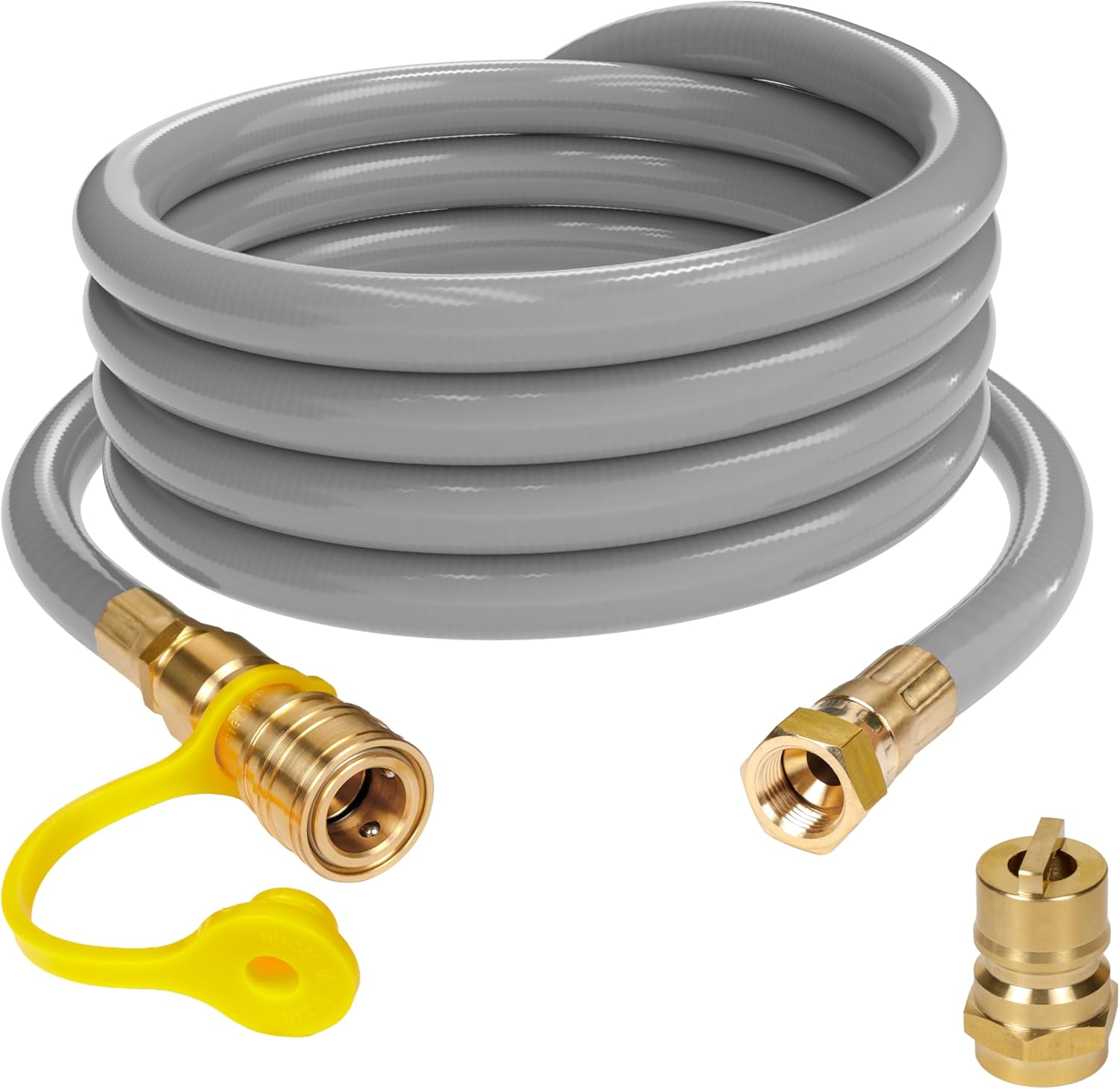
Generators designed for natural gas typically include or require a separate hose and regulator kit to connect to your home’s natural gas line. This connection is usually made at an exterior gas quick-connect port. It is vital to have this connection installed by a licensed professional to ensure it meets all local codes and is leak-free. Running on natural gas provides a nearly endless fuel supply if your line remains active.
Are portable tri-fuel generators noisy to operate?
Sound levels vary by model. Traditional open-frame generators are louder, while inverter models are significantly quieter because their engines can ramp down when the load is light. If noise is a concern, look for an inverter tri-fuel generator, which operates at a decibel level comparable to a normal conversation, making it more suitable for residential areas or campsites.





Write Your Review
No reviews yet. Be the first to share your experience!