

When the power goes out, your tri-fuel generator is only as reliable as its connection to fuel. While gasoline and propane require constant monitoring and refilling, a natural gas hookup offers true peace of mind with an essentially endless supply. However, this convenience hinges on a single critical component, the hose that bridges your home’s gas line to your generator.
Selecting the wrong hose can lead to leaks, poor performance, or even safety hazards. This guide is for Westinghouse generator owners looking to unlock the full potential of their tri-fuel unit. We will examine two purpose-built hoses designed specifically for this task, helping you achieve a secure and compliant connection for uninterrupted backup power.
Pros
- Eliminates the need for fuel storage, regular refueling trips, and emergency gas runs during outages
- Tool-free quick connect system makes setup and disconnection fast and effortless for any user
- Premium brass fittings and reinforced rubber construction provide durability and corrosion resistance for long-term reliability
- Generous 15-foot length offers flexible generator placement away from living areas and structures
- Highly rated by verified buyers who confirm excellent build quality and hassle-free performance
Cons
- Limited to Westinghouse tri fuel generators under 14,500W, so higher-wattage models are not compatible
- Requires professional natural gas line installation to your generator location, adding upfront setup costs
- Only includes 30-day limited warranty, which is shorter than some competitor products offer
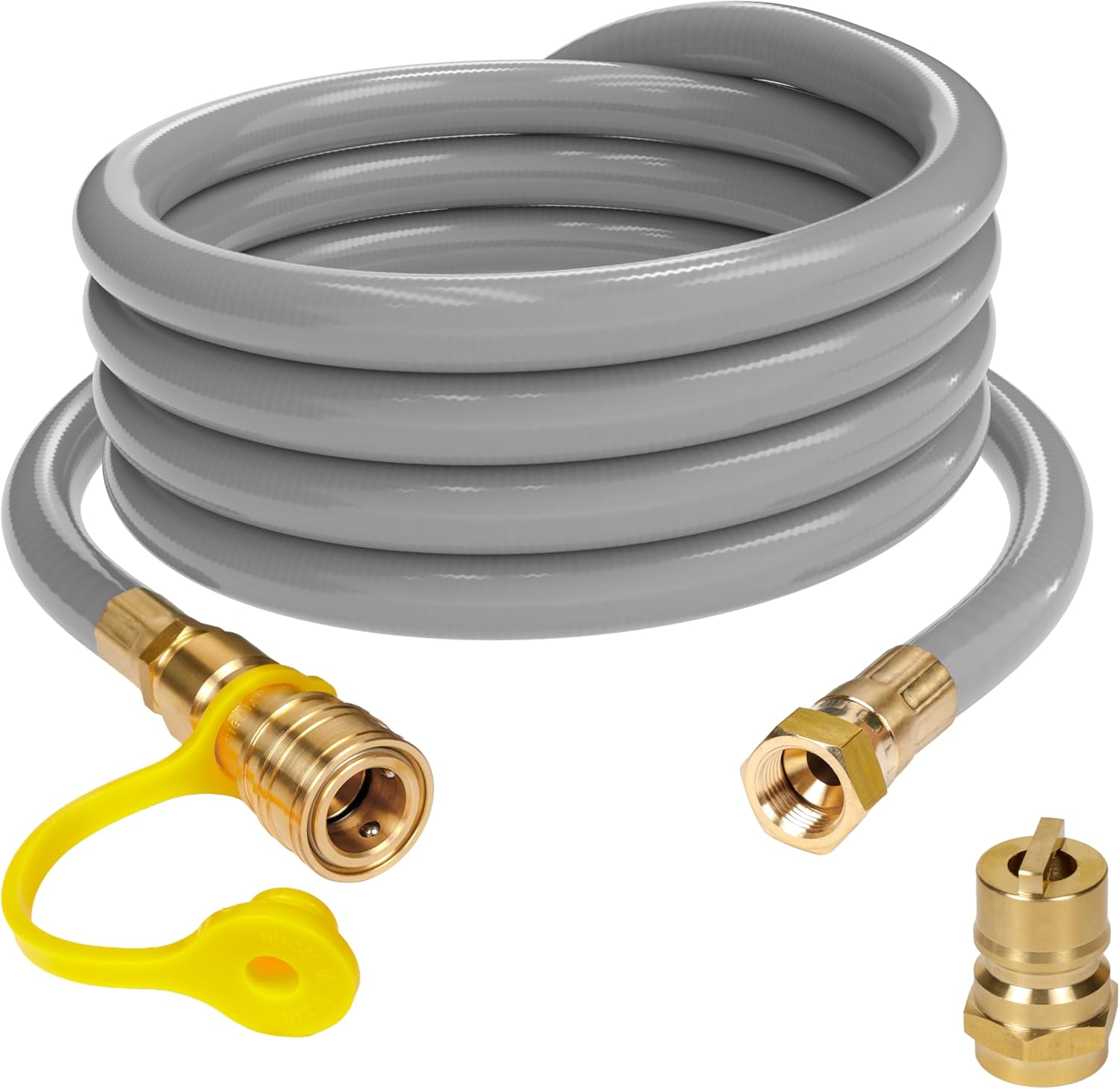
The Westinghouse 15-Foot Natural Gas Hose with Quick Connect Adapter is designed for homeowners who own Westinghouse tri fuel generators and want to eliminate the hassle of fuel management during power outages. This product bridges your home's natural gas supply to your generator, providing unlimited runtime without storing gasoline or propane. It's ideal for anyone seeking a set-it-and-forget-it backup power solution.
The standout feature is the quick connect adapter system that stays permanently attached to your generator's gas intake valve. The hose simply clicks on when needed and off when finished, requiring no tools or complicated procedures. Verified owners confirm the hose is flexible enough for practical use while maintaining secure connections at both ends. The 15-foot length provides substantial reach, allowing you to position your generator safely away from your house or garage where exhaust ventilation is optimal.
Build quality is impressive throughout. The hose features reinforced layers with a weather-resistant rubber outer coating that withstands extreme conditions without cracking or kinking. Solid brass fittings ensure corrosion resistance and a secure fit that lasts for years. The entire assembly is CSA certified, meeting safety standards for natural gas applications. At 4.6 pounds, it's portable enough to store away between uses.
The main limitation is compatibility, as this hose works only with Westinghouse tri fuel generators rated under 14,500 running watts. Additionally, you'll need to hire a professional plumber to run a natural gas line to your generator location, which represents an additional upfront investment beyond the hose itself. The 30-day limited warranty is relatively brief compared to some alternatives.
Overall, this is a well-engineered solution for Westinghouse tri fuel generator owners seeking reliable, maintenance-free backup power. The quick connect design, durable construction, and strong customer reviews make it a smart investment for anyone with a compatible generator and access to natural gas.
Before purchasing, confirm your generator is a Westinghouse tri fuel model rated under 14,500 running watts. Check your generator manual for the natural gas intake valve location and specifications.
Professional installation is recommended. Hire a licensed plumber or gas technician to run a natural gas line from your home's gas supply to your generator location on the patio or yard. This ensures proper pressure regulation, safety compliance, and code adherence. Once the gas line is installed, attach the included quick connect adapter to your generator's gas intake valve following the manufacturer's instructions. The hose then connects to the gas line on one end and clicks onto the adapter on the other. Test the connection for leaks using soapy water before operating the generator.
Always follow local building codes and manufacturer guidelines. Never attempt to modify the hose or fittings, and inspect the hose regularly for damage, cracks, or kinks before each use.

Pros
- Eliminates fuel management concerns with endless natural gas supply from your home line
- Tool-free quick connect system makes emergency power setup fast and hassle-free
- Durable brass and reinforced rubber construction resists weather damage and corrosion
- Adequate 25-foot length provides safe generator placement away from living spaces
- Highly rated by users for quality construction and reliable performance
Cons
- Requires professional installation to connect to your home's natural gas line
- Only compatible with Westinghouse tri fuel generators under 14,500 watts, limiting broader use
- Some units have arrived with missing quick disconnect adapters, requiring careful inspection upon delivery
The Westinghouse 25-Foot Natural Gas Hose with Quick Connect Adapter is purpose-built for homeowners with Westinghouse tri fuel generators who want to eliminate the burden of fuel management during power outages. This product is ideal for anyone seeking reliable backup power without the hassle of storing gasoline or propane, or making emergency fuel runs when disaster strikes.
The standout feature is the unlimited runtime capability when connected to your home's natural gas supply. The quick connect adapter system allows you to snap the hose on and off without tools, making it genuinely simple to deploy during emergencies and store away when not needed. Users consistently praise the pliable construction that rolls up neatly, and the quality of the quick coupler mechanism.
Built for durability, the hose features a reinforced rubber outer layer that resists cracking and kinking in extreme weather conditions. The solid brass fittings provide a secure, corrosion-resistant connection that maintains integrity over time. CSA certification confirms the product meets safety standards for natural gas applications, giving you confidence in reliable operation.
The primary limitation is that installation must be performed by a qualified professional to connect safely to your home's gas line. Additionally, this hose is specifically designed for Westinghouse tri fuel generators under 14,500 watts, so compatibility checking is essential before purchase. A small percentage of units have arrived with missing adapters, so verify contents immediately upon delivery.
Overall, this natural gas hose delivers excellent value for Westinghouse generator owners seeking convenient, unlimited backup power. The robust construction, intuitive quick connect design, and strong user ratings make it a dependable choice for home emergency preparedness.
Dimensions and Capacity: Outside diameter of 0.5 inches with 25-foot length, compatible with Westinghouse tri fuel generators rated under 14,500 running watts.
Materials and Construction: Premium brass fittings combined with reinforced rubber outer layer for durability and weather resistance. Gray color finish.
Safety and Warranty: CSA certified for natural gas applications. Backed by Westinghouse's 30-day limited warranty. Includes quick connect adapter for tool-free installation.
What's Included: One 25-foot natural gas hose with integrated quick connect adapter ready for immediate use.
Is This Right For You? This hose is essential if you own a Westinghouse tri fuel generator under 14,500 watts and want to tap into your home's natural gas line for unlimited backup power. It's perfect for homeowners in areas with reliable natural gas infrastructure who want to eliminate fuel storage and emergency fuel runs.
Installation Considerations: Professional installation by a qualified plumber or gas technician is recommended to safely connect to your home's gas line. This ensures proper pressure regulation, leak testing, and compliance with local codes. Budget accordingly for professional installation costs.
Compatibility Check: Verify your Westinghouse generator model and wattage rating before purchasing. This hose works with tri fuel models under 14,500 running watts. Check your generator documentation or contact Westinghouse support if unsure.
Delivery Verification: Upon arrival, immediately inspect the package contents. Confirm the quick disconnect adapter is included and undamaged. The hose should arrive in sealed packaging. Contact the seller promptly if components are missing.
What to Look for in a Natural Gas Hose
Certification and Safety Standards
Never compromise on safety certifications. A hose for natural gas must be specifically rated and certified for that fuel type. Look for CSA certification, which confirms the product has been validated for use with natural gas in North America.
This certification ensures the materials can handle the gas pressure and composition without degrading. Using an uncertified hose, like a standard garden hose or one meant for propane, is dangerous and can void your generator’s warranty. For related safety components, explore our guide on interlock kits.
Hose Length and Placement
<!–Choosing the correct length is a practical necessity. A hose that is too short forces you to place the generator too close to your home, which can be a safety and noise issue. One that is excessively long can create tripping hazards and may impact fuel delivery efficiency.
Measure the distance from your home’s natural gas quick-connect outlet to your desired generator location. Remember to account for a safe, level placement on stable ground. The right length gives you flexibility for optimal positioning, much like selecting the correct extension cords for your power needs.
Construction and Durability
Examine the build quality. A premium natural gas hose features reinforced layers for strength and kink resistance. The outer jacket should be weather-resistant to withstand sun, rain, and temperature extremes without cracking.
Fittings are equally important. Solid brass connectors resist corrosion and provide a secure, leak-free seal at both the generator and gas line connection points. This robust construction ensures the hose remains a reliable part of your system for years, complementing a good maintenance routine.
Compatibility and Ease of Use
Confirm the hose is compatible with your specific generator model and fuel capacity. The diameter must match your generator’s intake valve, typically 1/2 inch for residential Westinghouse units under 14,500 running watts.
A quick-connect adapter system is a major convenience. It allows for tool-free connection and disconnection, which is ideal for emergency use and storage. This plug-and-play functionality makes switching to natural gas a simple process when you need it most.
Final Thoughts
For a reliable and safe connection to your home’s natural gas line, a dedicated, certified hose is non-negotiable. Our evaluation confirms that both the Westinghouse 15-Foot Natural Gas Hose and the Westinghouse 25-Foot Natural Gas Hose offer the robust construction and CSA certification required for peace of mind. Your choice ultimately depends on the specific layout of your home and where you need to place your generator for safe, effective operation. For more information on tri-fuel systems, visit our comprehensive category page or the broader fuel types hub.
Frequently Asked Questions
Can I use a propane hose for natural gas on my tri-fuel generator?
No, you should never use a propane hose for natural gas. The fittings, internal materials, and pressure ratings are different for each fuel type. Using the wrong hose can cause leaks, poor generator performance, and is a serious safety hazard. Always use a hose specifically certified for natural gas application.
How do I know what length natural gas hose I need?
Measure the distance from your home’s exterior natural gas quick-connect outlet to the spot where you plan to operate your generator. Add a few extra feet for a safe, slack-free connection that avoids tension. The generator should be placed on level ground, at least 5-10 feet away from your home for proper ventilation and safety.
Do I need a professional to install a natural gas hose for my generator?
While connecting the quick-connect hose to the generator is straightforward, the initial installation of the natural gas line and exterior outlet must be performed by a licensed professional. A qualified plumber or gas fitter will ensure the supply line is correctly sized, the shut-off valve is properly located, and the entire system meets local building and safety codes for 2026.
Are there other fuel hose options for tri-fuel generators?
Yes. Tri-fuel generators are designed to run on gasoline, propane, and natural gas. While this article focuses on natural gas connections, you can also use dedicated propane hoses with appropriate regulators. You can find reviewed options for propane hoses here. Always use the correct hose and fittings specified for each fuel type.






Write Your Review
No reviews yet. Be the first to share your experience!